
01🧠
Life Skills
Emotional intelligence, decision-making, problem-solving, and time management — the resilient foundation every teenager needs.
- Emotional intelligence
- Decision-making
- Problem-solving
- Time & stress management
Positivity Framework™ · Ages 11–17
adolescents (10–19) faces a mental health challenge — most go unaddressed. Positivity, resilience and confidence can be trained, and 11–17 is when lifelong habits lock in.
Source: World Health Organisation
As seen in




Sound familiar?
What parents tell us most often

The reminder loop
“I remind, she shouts, I feel terrible, and tomorrow we do it all again.”

The phone and the late night
Awake until 2 am, asleep through the morning, angry when the screen goes off.

Going blank in the exam
“He knew it at home.” And a fear he never mentioned until it was too late.

“Why should I?”
Gives up the moment it gets hard, or does the bare minimum.

The closed door
One-word answers at home, a very different child around friends.

Doing it all alone
One parent carries everything. The other says, “All teens are like this.”
The Challenge
Children aged 11–17 face growing pressures — mobile addiction, peer pressure, academic stress, and pervasive negativity. WHO reports that 1 in 7 children in this age group faces mental health challenges, often untreated.
The most crucial skill of our era isn't coding or leadership — it's positivity. At MiTran Global, we've built the framework to instil it systematically.
Book a call →After the change
What home can start to feel like

Out of the reminder loop
Fewer reminders, more ownership. You hand over one task and step back — no shouting needed.

A phone and sleep plan that holds
A plan your teen helped write, so nights end earlier and mornings start calmer.

Steady in the exam hall
A simple routine for before and during exams, so what they know at home shows up on paper.

From “Why should I?” to “Let me try”
Small stretches build real self-belief, so effort doesn’t stop the moment it gets hard.

The door opens again
Better questions than “How was your day?” — and conversations your teen actually wants to have.

Parenting as a team
Both parents on the same page, with a toolkit that has a page for the other parent.
The Framework
Exclusively for students aged 11–17
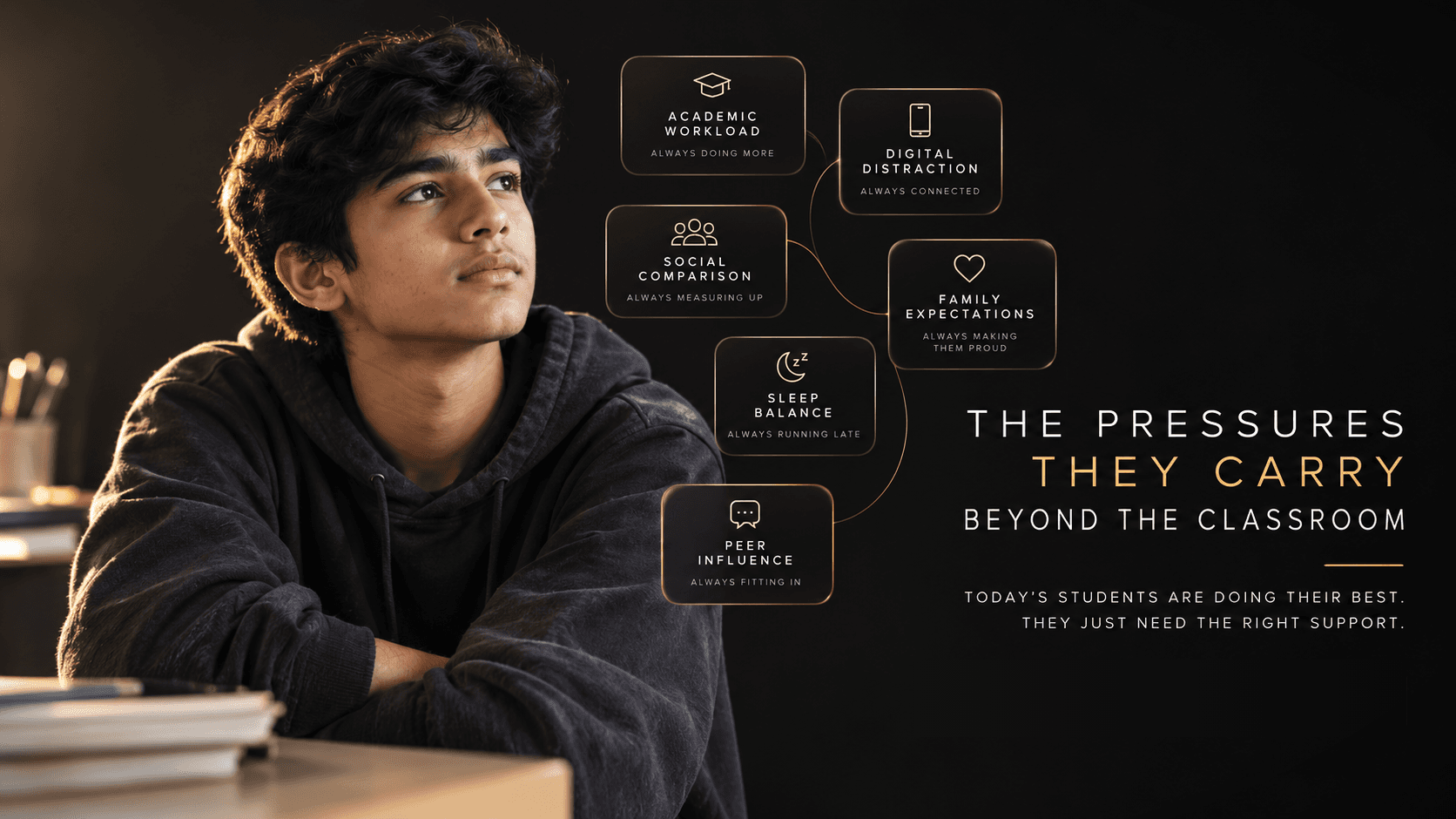
Stage 01·The Hidden Obstacles
Children aged 11–17 navigate mobile addiction, peer pressure, academic stress, and constant negativity. Our Positivity Hub gives them a space to thrive — emotionally, intellectually, and socially.
Even the most talented child can stall under self-doubt when negativity takes over.
With positivity, a child with average skills stays motivated — and achieves remarkable success.
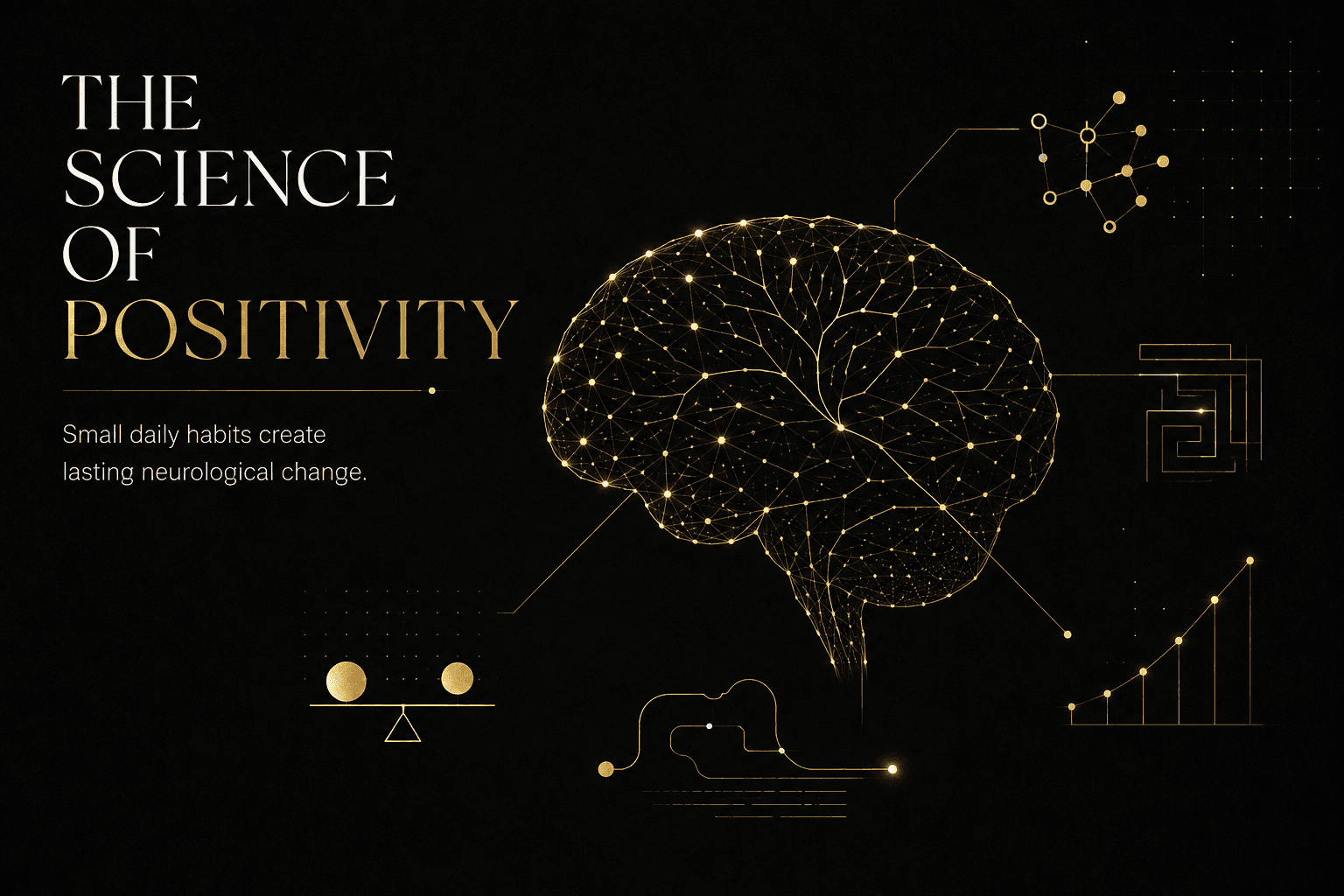
Stage 02·The Science Behind the Hub
Positivity isn’t a slogan — it’s a measurable, teachable practice. We reinforce it consistently until it becomes mindset.
WHO1 in 7 children (10–19) faces a mental-health challenge — most go untreated, stalling study, life, and leadership skills.
StanfordPositivity measurably lifts academics, mental health, and relationships, while negativity holds students back.
PracticeLike any habit, regular reinforcement builds resilience, confidence, and a proactive attitude.
NLPWe use Neuro-Linguistic Programming and human psychology to give children and parents tools for lifelong success.
Stage 03·How the Framework Works
Every child deserves to feel positive, empowered, and future-ready. Our learning model turns that belief into daily, lasting habits.
One on One Calls
Private sessions with a certified Transformation Coach, built around your child's own goals.
World Class Lessons
Self-paced video lessons on mindset, learning and exams — any time, on any device.
Power Up Live Sessions
Small-group live sessions on real teen challenges, chosen from parent and student inputs.
Community Engagement
Peer discussions and challenges that keep the learning going between sessions.
Scientific Assessments
Emotion-AI assessments that show where your child starts and how far they grow.
Verified Certificates
Official certificates on completion that recognise your child's progress.
Our Framework
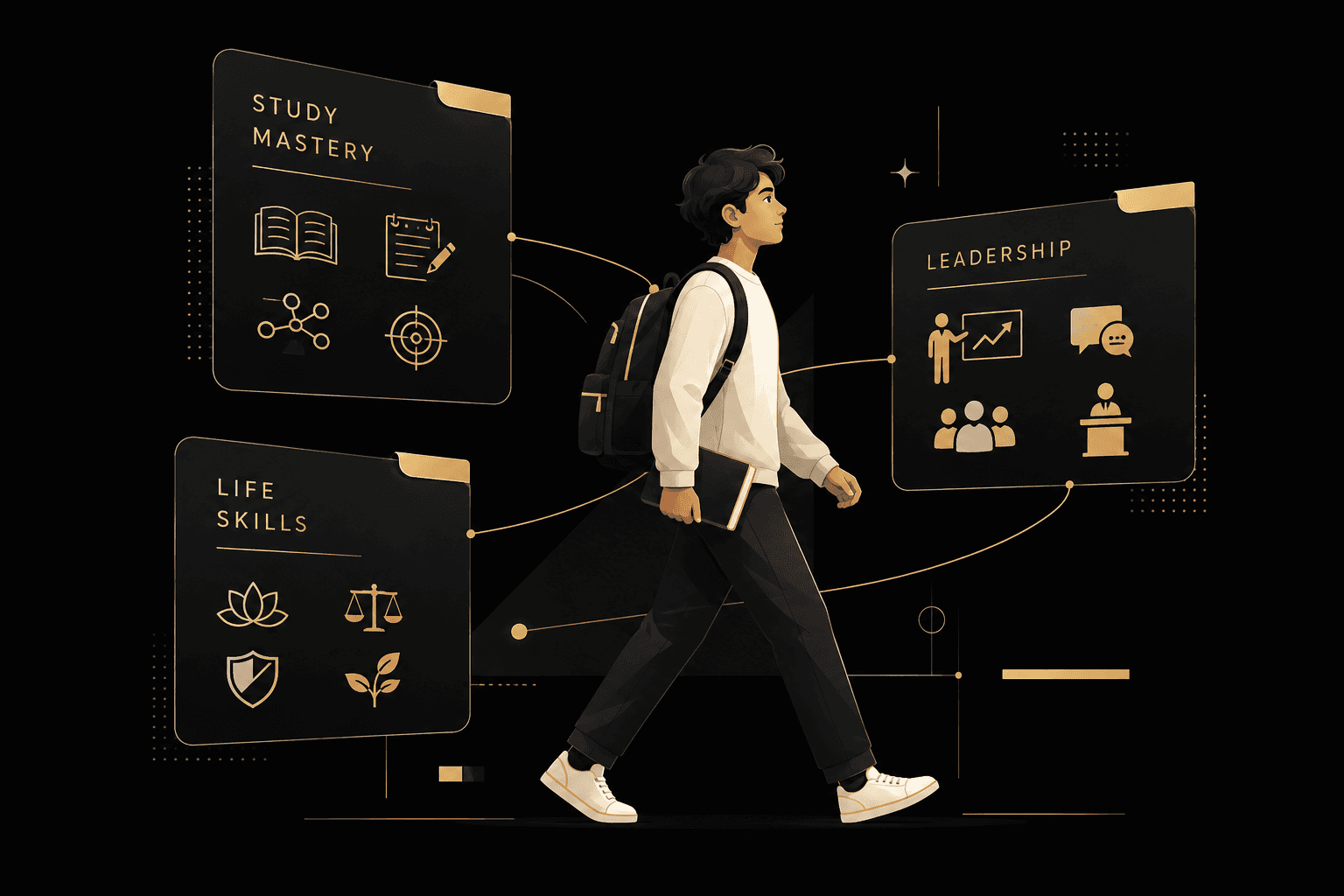
Like legs of a stool — without one, everything wobbles. Our Positivity Framework™ balances all three simultaneously.
Emotional intelligence, decision-making, problem-solving, and time management — the resilient foundation every teenager needs.
Self-confidence, communication, teamwork, and purposeful decision-making. We nurture the leader within every child.
Focus, growth mindset, smart study techniques, and sustained motivation. When positivity meets learning, students excel.
The solution
An expert coach and our EmotionAI-powered Positivity Tracker read the emotion and score the gap — then mentoring closes it.
01Understand
02Score the gap
03Mentor
Every teen is scored on all ten, every cycle.